
Drain Camera Inspection in New Holland
See inside the line before you pay to clear it again. We connect New Holland homeowners with independent local technicians who run a camera through the drain, show you the footage and explain what it means in plain language.
Serving New Holland 17557: New Holland Borough, Earl Township, Martindale, Hinkletown, Vogansville and Laurel Hill.
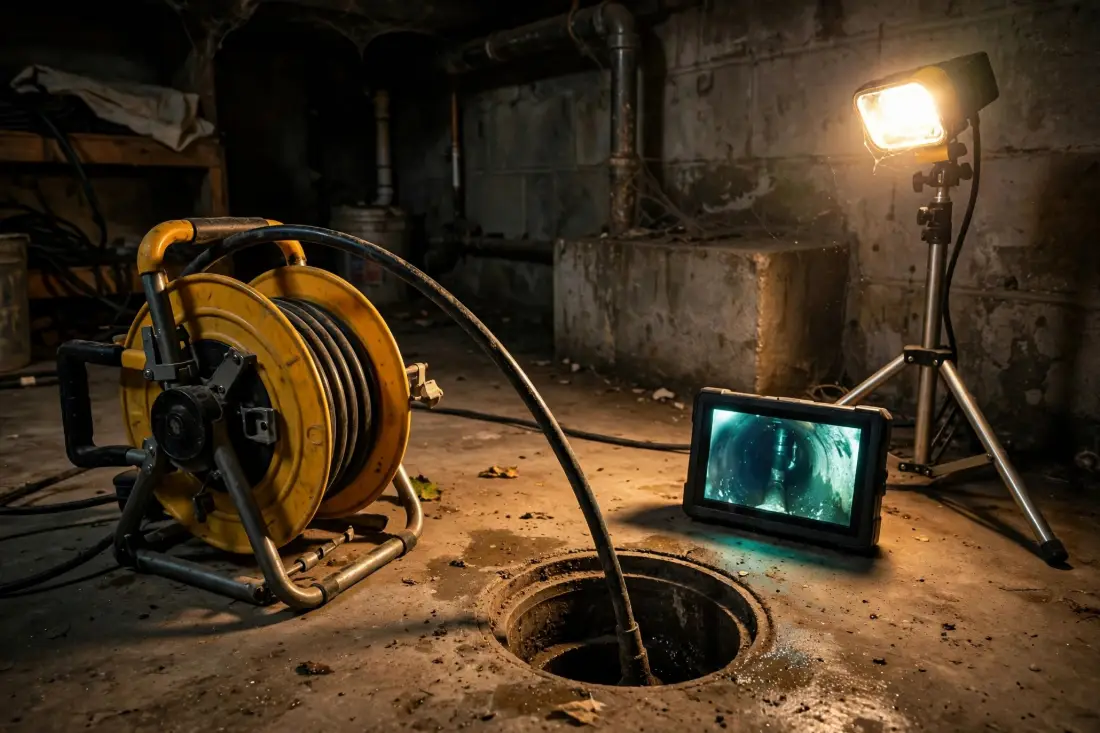
What a camera run gives you
- A waterproof camera on a flexible cable, fed through the line while you watch.
- Live video showing roots, cracks, bellies, offsets and build-up inside the pipe.
- The problem spot located and marked, with a straight answer on the phone.
A drain camera inspection in New Holland turns a mystery into footage you can see. Instead of clearing the same line a third time and hoping it holds, a technician feeds a small camera through the drain and shows you exactly what is happening inside: root hairs at a joint, a low belly holding water, a cracked section, or simple build-up narrowing the pipe. We connect homeowners in New Holland Borough, Earl Township and the nearby villages with independent local pros who run cameras every week, and every visit starts with a call to (223) 245-0051, where you describe what you are seeing and get a straight answer about whether an inspection fits your problem.
This page covers when a camera run makes sense, what the video can and cannot show, and how the problem spot gets located. Calls are answered 24/7, and pricing is explained before any work begins.
Talk through your line with a local tech
When a Drain Camera Inspection Makes Sense in New Holland
The short version: when clearing has stopped being the answer. If the same drain clogs again within weeks of being cleared, the clog was a symptom and the camera finds the cause. A drain camera inspection New Holland homeowners schedule most often is the one after the second or third clearing of the same line, when patience with snaking has run out.
It also makes sense when several fixtures slow down at once, when a basement floor drain has backed up more than once, or when a line was cleared but nobody could say why it clogged. And if water is actively backing up through drains or the toilet right now, that is not an inspection call. That is a job for emergency drain cleaning, and the camera can come through after the line is open.
What a Video Pipe Inspection Can Show Inside Your Drains
A video pipe inspection is exactly what it sounds like: a self-leveling camera lens on the end of a push cable, traveling the length of your line while the footage plays on a monitor. The drain line camera shows the pipe as it actually is. Here is what typically appears on screen in New Holland homes.
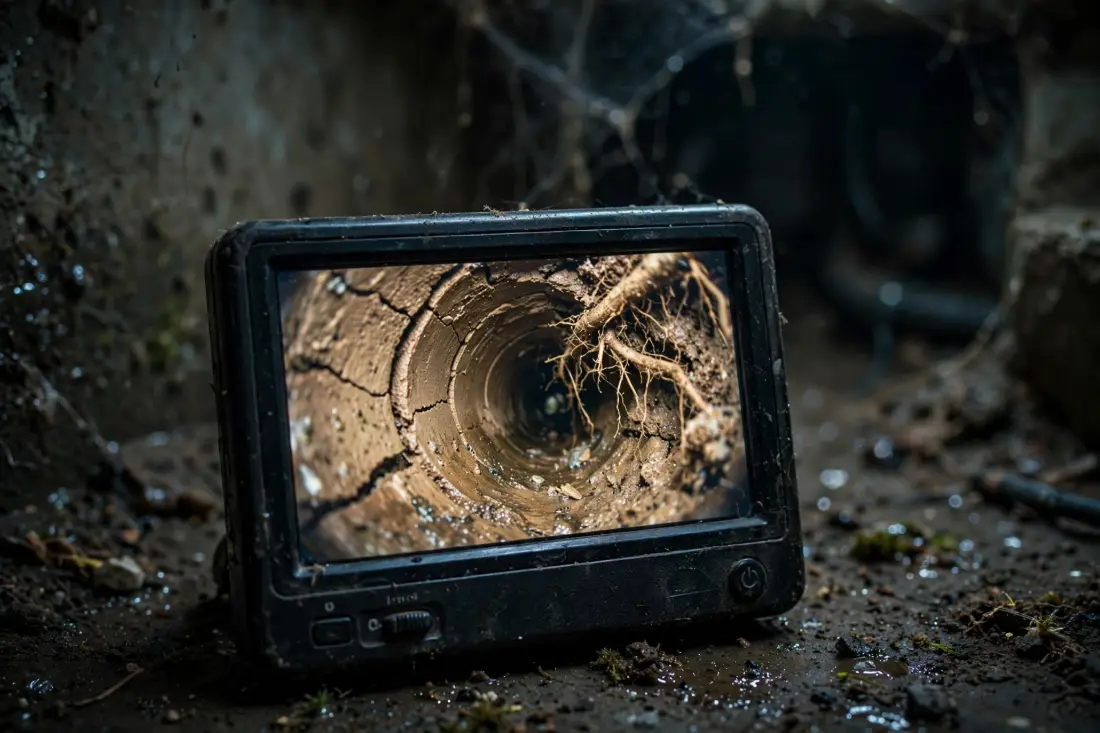
Roots come first in older neighborhoods. They enter as fine hairs through pipe joints and grow into dense mats that catch everything passing by. Bellies are low spots where the ground has settled and water sits instead of flowing; you can watch the water line tilt on screen. Offsets and separated joints show as dark steps in the pipe wall. Cracks and breaks appear as jagged lines with soil behind them. Grease and scale show as rough, narrowed walls, and now and then the camera finds objects that never belonged in a drain at all.
The video has honest limits. It shows the inside of the pipe, not the soil or concrete around it, and heavy build-up can cloud the picture, which is why the technician sometimes runs the camera after a light clearing rather than through a full blockage. A footage counter on the cable tells you how far into the line each finding sits, so nothing stays vague.
Ask about a video pipe inspection
How the Problem Spot Gets Located
Seeing the problem is only half the job; knowing where it sits under your yard or floor is the other half. The camera head carries a small transmitter, called a sonde, and the technician sweeps a receiver across the ground above the line. Where the signal is strongest, the spot gets marked, with an approximate depth reading.
This matters most when the fix goes beyond clearing. Camera technicians know exactly where drain cleaning ends: if the footage shows a collapsed or broken section that no cable or jet can fix, the technician will tell you plainly and point you toward the trade that handles that work. No exploratory digging, no clearing a line that cannot be cleared.
It also ends the cycle of repeat visits in the same basement. Instead of another round of floor drain cleaning on the same drain, the footage finds the joint or root ball the cable keeps missing, and the next visit can address the actual cause.
After Repeat Clogs: Inspect Before You Clear Again
Clearing a drain and diagnosing a drain are different jobs, and this is the idea this whole site is built on. A cable feels resistance; a camera shows the reason. When a homeowner calls for drain camera inspection New Holland wide, the story is almost always the same: same drain, third clog, tired of paying to clear it. The inspection changes the question from how often to why.
That is the real job of a sewer camera inspection. It does not prevent the next clog and no honest technician would promise that, but it tells you whether you are fighting roots, a belly, a broken section or just build-up, and each of those points to a different next step.
Buying a Home? Why a Drain Camera Inspection Helps First
A drain camera inspection in New Holland earns its keep before a purchase too. Borough homes from the 1700s through the early 1900s carry cast iron and clay lines that have lived through two centuries of roots, settling and freeze-thaw, and the footage shows their condition on the day of the inspection. Schedule it alongside the rest of the home inspection, while you still have room to negotiate.
What the camera shows is information, not a verdict. Clean pipe on screen is good news worth having. Roots or a belly are facts you can price into the purchase. Either way you walk into the closing knowing what is under the yard, which beats discovering it with the first backup.
New Holland Homes: What the Camera Finds Here
In New Holland Borough, the housing tells the story before the camera ever goes in. The 18th and 19th century core and the early 20th century blocks carry the oldest drains in the area: cast iron and clay, joined at intervals that tree roots have had decades to find. Those lines are the classic camera candidates, which is why drain cleaning in New Holland Borough so often pairs a clearing with a look inside.
In Earl Township, the 1980s to 2000s subdivisions run PVC, which resists roots but can settle into bellies where the ground moves, and deep frost and freeze-thaw cycles stress every buried line in a Pennsylvania winter. Out in the rural villages, homes on on-lot septic get the same indoor camera service: the inspection runs the same way whether the house sits on public sewer or septic, while septic tank pumping, repair and inspection stay outside this service.
Around Hinkletown, mature trees and older village homes make roots the most common finding on screen. Homeowners weighing drain cleaning in Hinkletown are smart to ask what the footage shows before approving another round of clearing.
While You Wait for the Technician
- Clear a path to the basement cleanout or the fixture the camera will enter through, and move anything fragile out of the work area.
- Write down which drains are slow and when the trouble started; it focuses the inspection.
- Do not pour chemical drain cleaner into the line. It can harm pipes and the technician.
- Keep children and pets away from the work area, and note any recent digging, settling or new trees near the line.
Frequently Asked Questions
It shows the inside of the line in live video: roots entering at joints, low bellies holding water, offset or separated joints, cracks and breaks, scale and grease build-up, and objects that should not be there. It also shows clean, healthy pipe, which is useful information too. What it cannot show is the soil or concrete outside the pipe, or any promise about the future.
Yes. The footage plays on a monitor at the access point, and most technicians narrate as they go, pointing out each joint and defect in plain language. Ask questions while you watch; it is your line and your footage. Many homeowners say the narrated tour is the most useful part of the visit.
Usually, yes. The camera head carries a small transmitter, and the technician sweeps a receiver across the yard or floor to mark the spot and the approximate depth. That matters when the follow-up needs a targeted dig: instead of guessing, the next trade starts at a marked point.
For older Borough homes with cast iron or clay, many buyers think so. A camera run shows roots, bellies and breaks before the purchase, which is information you can use while negotiating. It does not promise anything about the future; it only shows its condition that day. Schedule it alongside the rest of the home inspection.
A typical single-line residential inspection fits inside one service visit. The exact time depends on the length of the line, how easy the access point is to reach, and whether the line needs a light clearing first so the camera can pass. The technician can give you a sense of it when you describe your line on the phone.
Not through a toilet that is still in place. The camera enters through an accessible cleanout, or through a toilet that the technician has pulled and will reset. Which access point gets used depends on your home's layout, and the technician will tell you what to expect when you call.
You see the footage, and the technician explains what it means in plain language. Build-up can be cleared and roots can often be cut back, while a broken or collapsed section is beyond drain cleaning, and the technician will say so plainly and tell you what kind of specialist handles it. Pricing is always explained before any work begins.
Not always, but a fully blocked line stops the camera cold, and heavy build-up clouds the picture. When that happens the technician opens the line first, sometimes only partially, just enough to get a clear view.
Get a Look Inside Before You Clear It Again
If the same drain keeps clogging, stop guessing. Call (223) 245-0051 for drain camera inspection in New Holland and see what is really inside the line before the next clearing.
(223) 245-0051 Get your line on camera