
Hydro Jetting in New Holland
When you need hydro jetting New Holland homeowners can reach any hour, you are in the right place. Jetting sends high-pressure water through a drain line to scour grease, sludge and scale off the full pipe wall, where a cable only punches a hole through the clog. We connect you with experienced local drain cleaning pros who run camera-first jetting jobs across New Holland and tell you straight whether your line is a good candidate. Calls are answered day and night, pricing is explained before the hose ever uncoils, and you can ask about any fees before you agree.
Call before it gets worseSound familiar?
- The same drain clogging again weeks after a cable clear
- Grease or sludge slowing a long run of pipe
- Roots growing back into the line
Hydro Jetting in New Holland: What It Is
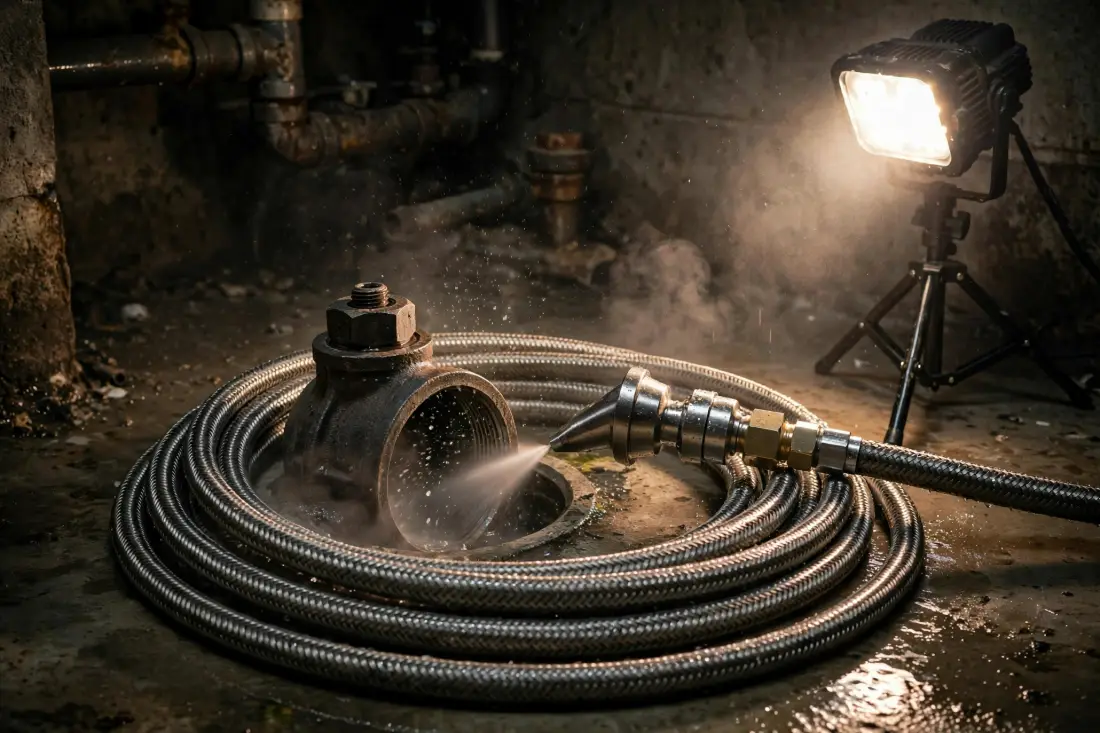
Hydro jetting is exactly what it sounds like: water, under high pressure, doing the cleaning. The tech feeds a hose with a specialized nozzle into the drain line through the cleanout. Rear-facing jets pull the hose forward through the pipe while forward jets blast the walls, peeling off grease, sludge and scale and flushing the debris downstream and out.
It is not a pressure washer pointed down a drain. The nozzles, pressures and technique are specific to drain lines, and the operator controls all of it from the cleanout. The result is a pipe wall that is actually clean, not just a clog with a hole punched through it.
The camera goes in before the hose does. Every responsible jetting job starts with a look inside the line, because pressure is only safe in sound pipe. If you are comparing quotes and one of them skips the camera, that tells you everything about the operator. Get a straight answer by phone
Hydro Jetting Drain Cleaning vs Cabling
Homeowners usually meet jetting after cabling has stopped working. A cable is fast and effective at cutting through a blockage, but it leaves the residue on the walls behind. In a grease-coated line, that residue is the next clog already forming. Jetting answers a different question: not just "is the line open" but "is the line clean."
| Method | What it does | Typical use |
|---|---|---|
| Cabling (drain snake) | A cutting head bores a path through the clog | First blockages, soft clogs, quick restores |
| Hydro jetting | High-pressure water scours the full pipe wall | Grease-coated lines, sludge, repeat clogs |
| Camera inspection | Shows the pipe condition before and after | Before any jetting job, and after repeat clogs |
Neither method is "better" in the abstract. Snaking opens; jetting scours. For a simple blockage in an otherwise healthy line, snaking is plenty and costs less. For a line coated in grease that clogs every few months, jetting does what a cable physically cannot. A straight tech recommends the one your line needs, in that order: camera, then the right method.
Jetting Grease and Roots: What Buildup It Handles
Grease is jetting's home turf. Years of cooking grease coat a kitchen branch or a main line in layers that a cable head just slides through, and the line narrows a little more each year. Pressurized water peels those layers off the wall and carries them out, which is why a jetted grease line stays open longer than a cabled one.
Roots are a qualified yes. Jetting cuts through root masses inside the pipe and flushes the debris away, restoring full flow. What it cannot do is repair the joints or cracks the roots entered through, so regrowth over time is normal. Sludge and scale respond well too, as long as the pipe underneath is sound.
When the main building drain is the problem, this same service is sometimes described as water jetting sewer line cleaning; the process and the camera-first rule are identical. And in borough basements, floor drain lines coated in sludge are common candidates; our page on floor drain cleaning covers those calls.
When Jetting Is Not the Right Call
Jetting is a powerful method, not a universal one, and an honest tech will talk you out of it when the pipe is wrong for it. Fragile or cracked pipe is the clearest no: pressure that scours a sound line can break a weakened one. Collapsed sections and separated joints are structural problems, and no amount of water fixes structure.
Bellies are another. A belly is a sagging section where water pools instead of flowing, and jetting a belly just moves water around inside the sag. Heavily corroded cast iron can be too thin to take the pressure, which the camera reveals before anyone commits. And jetting is for drain lines, not for septic tanks; the tank itself is a different trade.
This is the whole reason for camera-first ordering. The camera shows whether your line is a candidate before a single gallon flows. If the video shows damage, the tech tells you plainly and talks through the real options instead. Speak with a local drain cleaning tech
Camera First, Then Jet
The order is not negotiable: camera first, then jet. The camera confirms the pipe can take the pressure, shows exactly what the buildup is made of, and finds damage that jetting would make worse. It also locates the cleanout and any trouble spots, so the tech works with a map instead of guesses.
After the jetting, the camera goes back in. That second look confirms the line is actually clean wall to wall, not just open in the middle. It also records the pipe's condition for your records, which is genuinely useful if problems return later or you ever sell the home.
Read our page on drain camera inspection for the full picture of what the video shows. Any jetting proposal that skips straight to the hose is cutting the step that protects your pipe.
Hydro Jetting in New Holland Homes
New Holland's housing stock makes camera-first jetting more than a slogan. In the borough's oldest blocks, cast iron and clay lines have spent decades narrowing, and some are too fragile for pressure. There, the camera earns its keep by saying no when no is the right answer, and jetting only proceeds on lines the video clears.
The 1980s and 1990s neighborhoods and the Earl Township subdivisions are jetting's sweet spot: PVC lines in sound condition, coated in years of grease and sludge from normal family life. Those lines take the pressure well and come out genuinely clean. In the villages of Hinkletown and Martindale, drain cleaning in Hinkletown and drain cleaning in Martindale cover the indoor drain lines on both public sewer and on-lot septic; the jetting applies to the lines, never to the septic tank itself.
Winter adds urgency to grease calls. Cold pipe hardens grease faster, and kitchen and main lines that were marginal in October can seize up by January. If your line slows every cold season, that history helps the tech pick the right method on the first visit.
While You Wait
- Stop using water if drains are backing up; pressure work needs a calm line.
- Do not pour chemical drain cleaner down the line; it can harm pipes and the technician.
- If you know where your cleanout is, clear a path to it.
- Keep children and pets away from backed-up water.
- Note the clog history: how often it returns and what was done last time.
Hydro Jetting FAQs
It depends on the pipe's condition, which is exactly why a camera inspection comes first. Sound pipe handles jetting well; fragile, cracked, or collapsed pipe does not. The camera tells the tech which category your line falls into before any water flows.
Jetting cuts through root masses inside the pipe and flushes the debris out, which restores flow. What it cannot do is repair the joints or cracks the roots entered through. Expect regrowth over time unless the pipe itself is addressed, and ask the tech what the camera showed.
That depends on the pipe's condition and what goes down the drains afterward. Jetting leaves the line genuinely clean, but it does not change old joints or stop new grease from accumulating. Honest habits after the visit do more for longevity than any method choice.
They do different jobs. Snaking cuts a path through a clog quickly and costs less; jetting scours the full pipe wall clean. For a simple blockage, snaking is plenty. For grease-coated lines or repeat clogs, jetting does what a cable cannot. A straight tech recommends the one your line needs.
Usually the hose goes in through a cleanout, not a fixture. Small branch lines need the right nozzle and access, and the tech decides on site whether the line is a candidate. If access is a problem, the tech will explain the options before starting.
Less messy than most homeowners expect. The work happens at the cleanout, and the tech controls the water going in and coming back. Ask on the phone what to expect for your setup, and clear a path to the cleanout before the visit.
Because pressure is only safe in sound pipe. The camera confirms the line can take it, shows exactly what the buildup is, and finds damage that jetting would make worse. Skipping that step to save time is how good pipe gets hurt, so camera-first is the rule, not the upsell.
There is no schedule that fits every home. Jet when symptoms return: slow drains, repeat clogs, or gurgling that keeps coming back. A line in good shape with sensible habits may go years; an old line with root intrusion will tell you sooner.
Hydro Jetting New Holland Can Call Any Hour
For hydro jetting New Holland homeowners can reach day or night, call (223) 245-0051. Calls are answered around the clock, with pricing explained up front.
Book your hydro jetting visit