
Kitchen Drain Cleaning in New Holland
When you need kitchen drain cleaning New Holland homeowners can reach any hour of the day, you are in the right place. A blocked kitchen sink brings the whole household to a stop: dishes pile up, the disposal hums against standing water, and the smell starts by evening. We connect you with experienced local drain cleaning pros who clear kitchen sinks, disposals and dishwashers across New Holland, then tell you straight what caused the clog. Calls are answered 24/7, pricing is explained before any work begins, and you can ask about any fees before you agree.
Get New Holland help todaySound familiar?
- Water pooling in the sink every time you rinse a plate
- A sour smell rising from the drain or the disposal
- The dishwasher pushing water up into the sink
Why a Kitchen Sink Drain Clog Starts With Grease
Most kitchen clogs begin long before the sink stops draining. Every pan of bacon, every plate scraped into the sink, leaves a thin film on the inside of the pipe. Hot grease goes down liquid and cools into a solid coat a few feet down the line, where the pipe is coldest. Over weeks that coat thickens until water has to squeeze past it.
Starch makes it worse. Pasta, rice and potato peelings swell with water and turn pasty, and coffee grounds settle into the grease like sediment. A garbage disposal does not change this: it grinds food into smaller pieces, but those pieces still have to travel the same narrowed pipe. Running the disposal with a full load of peelings is one of the fastest ways to pack a branch line.
This is why a kitchen sink drain clog keeps coming back after a quick clear. Clearing the blockage restores flow, but it does not tell you what the line looks like inside. A pro treats the repeat clog as a symptom and looks for the cause, which is often a section of pipe narrowed by years of grease.
One Side or Both: Reading a Double Sink
A double sink is a built-in diagnostic tool. If only one basin drains slowly, the clog usually sits in that side's trap or tailpiece, the short run of pipe just under the sink. A plunger or a trap cleaning often sorts it.
If both basins are slow, or water pushed down one side rises in the other, the blockage sits past the point where the two sides join. That is the branch line inside the wall, and it is out of plunger territory. The same logic applies to a clogged kitchen sink that backs up when the dishwasher runs: the dishwasher shares that branch.
Tell the dispatcher which side is affected and what happens when you run water. It helps the tech bring the right cable length and head, and it shortens the visit. If bathroom fixtures are slow as well, the trouble may sit even further down the line; our page on main drain line cleaning explains how to tell the difference.
Dishwasher and Garbage Disposal Clog Backups
Dishwashers do not have their own drain to the outside. They pump dirty water into the same branch as the sink, usually through the disposal. So when the disposal is packed or the branch is narrowed, the dishwasher has nowhere to send its water, and it shows up in the sink instead.
Start simple: run the disposal with cold water flowing and see whether the sink drains better. If the disposal is jammed, turn it off and never put a hand inside. A reset button under the unit clears some jams, but a disposal that hums without spinning needs a pro, not force.
When the sink still fills after the disposal is clear, the clog is in the branch line and the dishwasher is just the messenger. A slow bathroom sink is a different system with different causes; see our page on bathroom drain cleaning for that one.
Clearing the Branch Line Behind the Wall
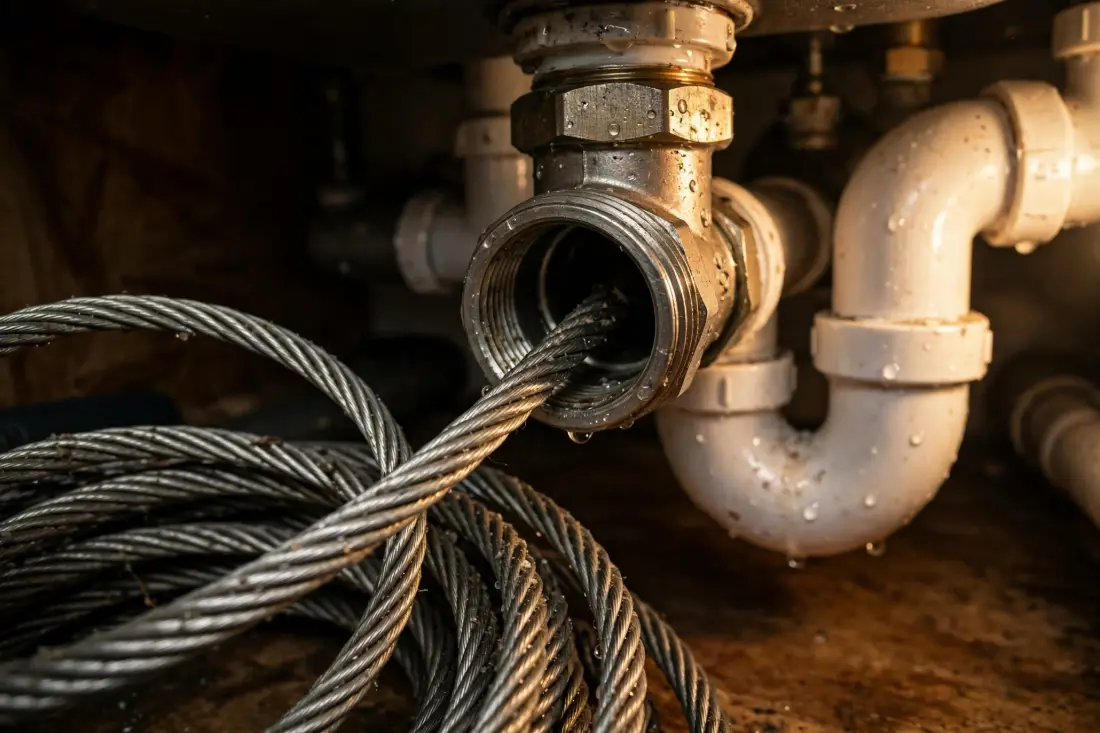
The branch line runs inside the wall from the sink to the larger drain stack, and you cannot see what it is doing. The tech usually starts with a drum auger, a flexible cable with a cutting head that feeds through the cleanout under the sink and bores through the clog. It is the right tool for a first or second kitchen blockage.
When grease coats the full run instead of sitting in one spot, the tech may recommend hydro jetting, which scours the pipe wall with high-pressure water instead of just punching a hole through the clog. A camera inspection goes in when clogs repeat, because it shows whether the line is narrowed, sagging or damaged. Clearing a drain and finding why it keeps clogging are different jobs.
| Method | What it does | Typical use |
|---|---|---|
| Drain auger (cable machine) | A cutting head on a flexible cable bores through soft clogs | A first or second blockage in the branch line |
| Hydro jetting | High-pressure water scours grease off the full pipe wall | A line coated in grease that keeps re-clogging |
| Camera inspection | A small camera shows the clog and the pipe condition | Repeat clogs, or before jetting an older line |
Kitchen Drain Cleaning in New Holland: Keeping the Line Clear
The habits that keep a kitchen line clear are boring, which is why they work. Scrape plates into the trash before rinsing. Wipe greasy pans with a paper towel before they hit the sink. Feed the disposal small amounts with cold water running, and never send down fibrous foods like celery in bulk.
Skip the shortcuts. Chemical drain cleaners can harm pipes and make the tech's job harder, and they rarely clear a real grease clog anyway. Enzyme products are sold as maintenance, not as a fix for a standing blockage. If the sink is already slow, habits come after the clear-out, not instead of it.
Kitchen Drains in New Holland Homes
New Holland's housing tells you what the kitchen line is likely made of. Along Main Street and the early-20th-century blocks of the borough, many homes still carry cast iron and clay drain lines, which corrode and scale from the inside over the decades. In the 1980s and 1990s neighborhoods around the borough, and the subdivisions of Earl Township, PVC is more common, and kitchen clogs there are usually about grease habits rather than pipe age.
That split shapes the work. In the borough, where the oldest lines run, drain cleaning in New Holland Borough often starts with a camera look, because a narrowed cast iron branch behaves differently from a greasy PVC one. Out in the village of Hinkletown, where homes sit on larger lots and many use on-lot septic, drain cleaning in Hinkletown still covers the kitchen line inside the house; septic tank pumping and repair are a different trade and not part of this service.
Cold winters add their own wrinkle: branch lines in exterior walls chill faster, and grease hardens sooner in a cold pipe. If your kitchen slows every winter, say so on the call. It is a useful clue for the tech.
While You Wait
- Stop running water into the slow sink; a backup can rise faster than you expect.
- Do not pour chemical drain cleaner down it; it can harm the pipe and the technician.
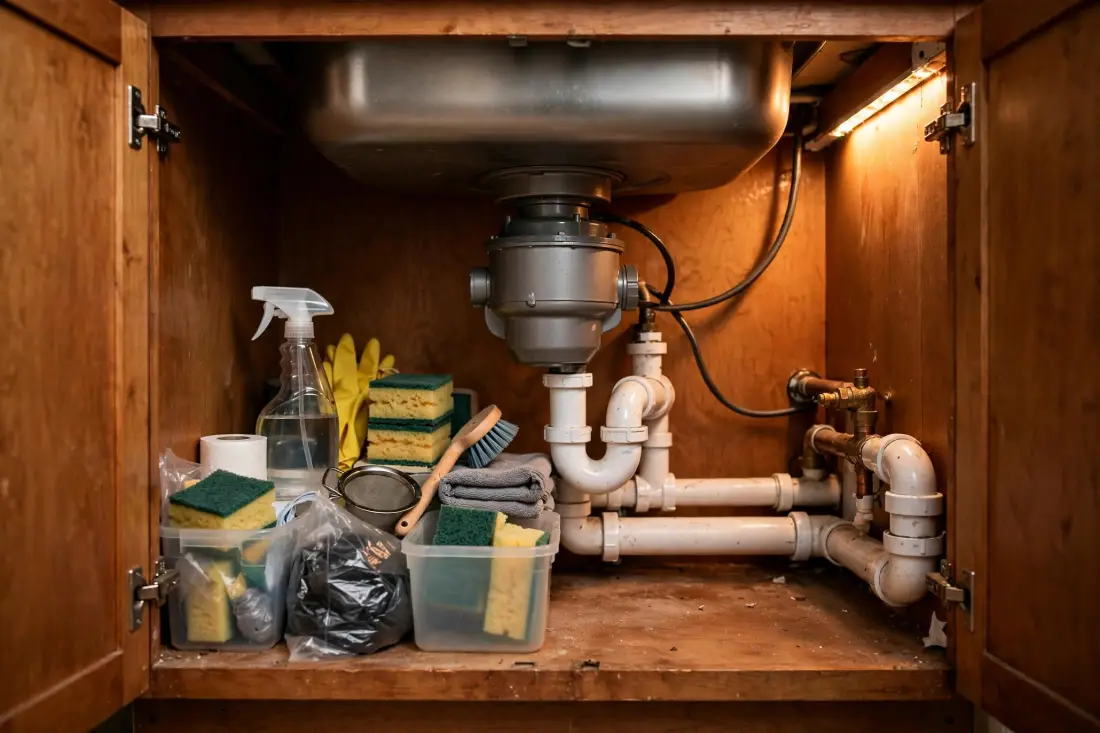
- Clear the cabinet under the sink so the tech can reach the trap and cleanout.
- Keep children and pets away from any backed-up water.
- Note which side backs up and when it started; it speeds the diagnosis.
Kitchen Drain Cleaning FAQs
A kitchen sink that clogs again and again usually has a narrowed line, not bad luck. Grease coats the pipe wall over time, and each quick clear only opens a path through the middle. A camera inspection shows whether the line is coated, sagging, or damaged so the real cause gets addressed.
Yes. Hot grease goes down liquid and turns solid a few feet down the pipe, where it is coldest. Layer after layer narrows the line until water can barely pass. Wiping pans with a paper towel before washing is the single simplest habit that protects a kitchen drain.
It can. A disposal grinds food into smaller pieces, but those pieces still travel the same pipe. Starchy and fibrous foods in large amounts, or running the disposal without enough water, can pack the branch line. Small amounts with cold water running are much safer for the drain.
The dishwasher pumps its dirty water into the same branch line as the sink, usually through the disposal. When that branch is narrowed or the disposal is packed, the water has nowhere else to go and rises in the sink. Running the disposal first sometimes helps; if the sink still fills, the branch line needs a pro.
Cabling and jetting restore flow, which is what you need right now. Neither one changes the condition of the pipe itself. If the line keeps clogging, the honest next step is a camera look to find out why, because clearing a drain and finding the cause are different jobs.
Enzyme products are sold as maintenance, not as a fix for a standing blockage. They will not dissolve a real grease clog or open a narrowed line. If the sink is already slow, save the money and call for a proper clear-out instead.
Try to avoid running water into a slow sink, because a backup can rise faster than you expect. If the sink still drains, small careful use is usually fine. Once water starts pooling, stop using it until the technician clears the line.
It depends on where the clog sits and what it is made of, so no honest answer fits every kitchen. Describe what the sink is doing when you call, and the technician will explain what to expect before any work begins. Pricing is explained upfront, and you can ask about any fees before you agree.
Kitchen Drain Cleaning New Holland Can Call Any Hour
For kitchen drain cleaning New Holland homeowners can reach day or night, call (223) 245-0051. Calls are answered 24/7, and pricing is explained before work begins.
Book your kitchen drain cleaning visit